
Pallet Racking, Longspan or Cantilever: Which Storage System Is Right for Your Business?
Choosing warehouse storage starts with three questions: what are you storing, how heavy is it, and how will your team move it? Pallet racking, longspan shelving and cantilever racking solve different problems. Choosing the right system can make everyday picking and replenishment easier while helping you use your available space effectively.
This guide is a practical starting point for businesses planning a new warehouse, fitting out a shed or reviewing an existing storage area.
A quick comparison
| System | Typical starting point | Main question before buying |
|---|---|---|
| Pallet racking | Palletised goods moved with a forklift | What are your loaded pallet dimensions, weights and handling requirements? |
| Longspan shelving | Cartons, parts and other goods picked by hand | Can staff reach and handle the items safely? |
| Cantilever racking | Long products such as timber, pipe and steel sections | How will the product be supported and loaded? |
Pallet racking: start here for palletised stock
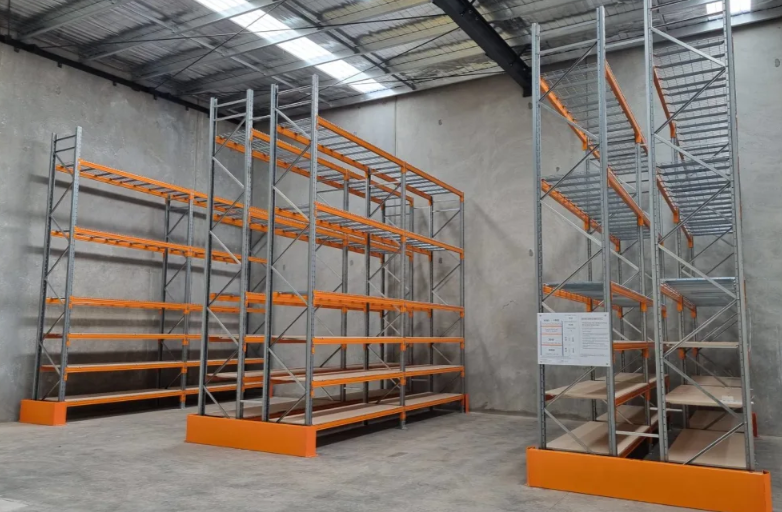
If stock arrives on pallets and stays on pallets until it is needed, pallet racking is a sensible system to investigate. Selective pallet racking provides access to individual pallet positions, which can suit businesses carrying a varied product range.
For example, a distributor receiving palletised cartons may need reserve stock above ground level and a separate area for picking individual orders. The layout should account for both activities, including how people and forklifts move through the warehouse.
Before requesting a quote, record the dimensions and maximum weight of your loaded pallets, including any overhang. Supply your forklift make and model as well. Aisle requirements depend on the equipment and loads, so there is no single aisle width that suits every warehouse.
Longspan shelving: start here for hand-picked goods
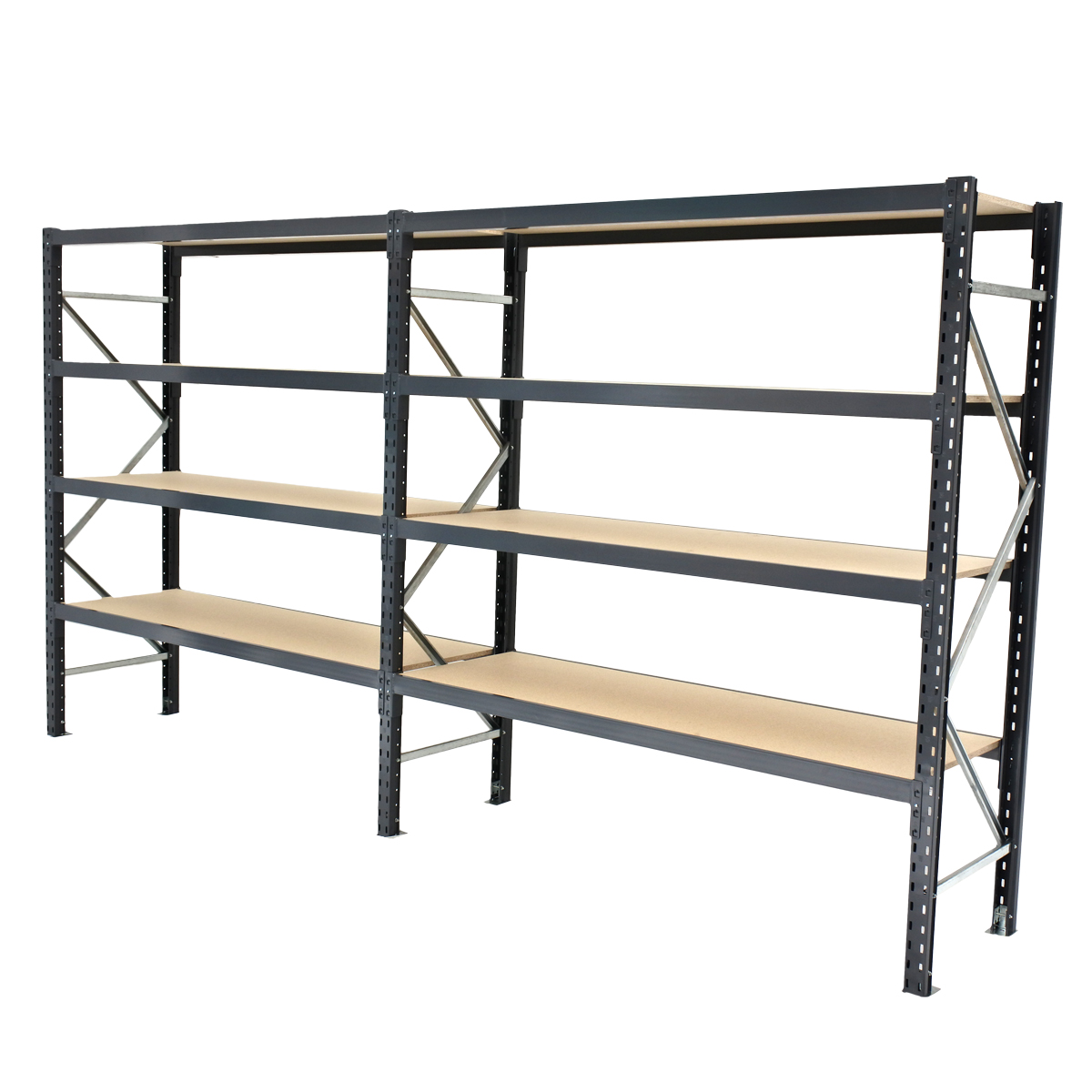
Longspan shelving is worth considering for cartons, spare parts, tools and other items staff retrieve by hand. Adjustable shelf levels allow the layout to be planned around different product heights.
A spare-parts business, for example, might group frequently picked items at convenient working heights and use separate storage for less frequently accessed stock. Shelf depth matters as much as height: a deeper shelf is not automatically better if the goods at the back are difficult to reach.
Ask for the capacity of the complete proposed configuration, including the shelf decking. Confirm how that capacity assumes the load is distributed. Do not assume a rating for evenly spread cartons also covers a heavy item concentrated on a small area.
Cantilever racking: start here for long products
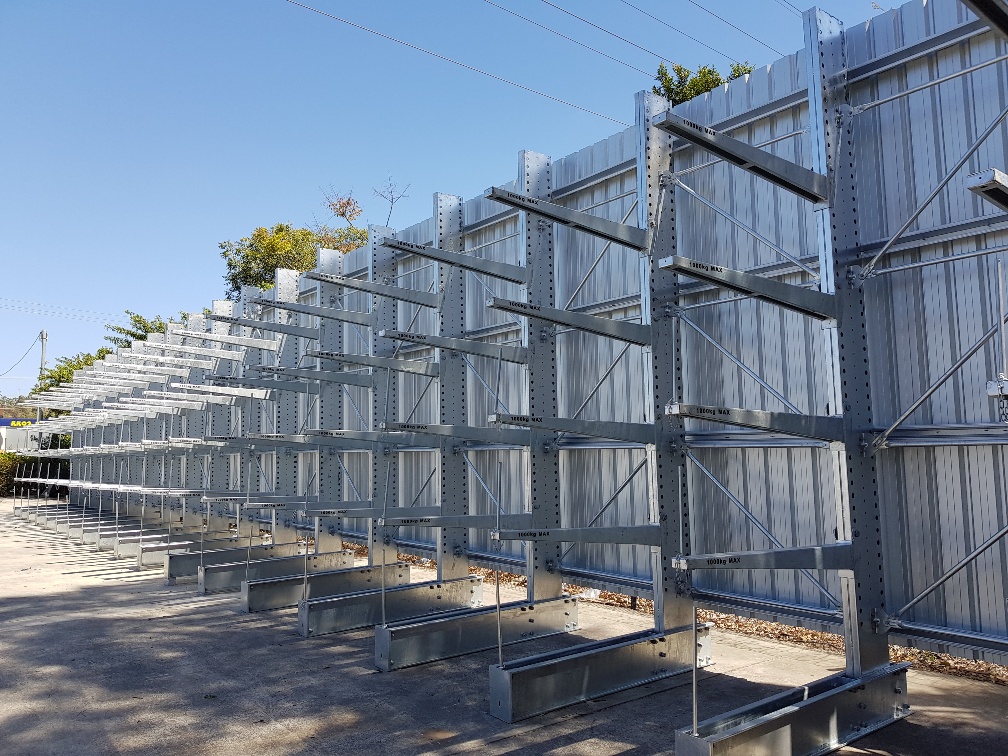
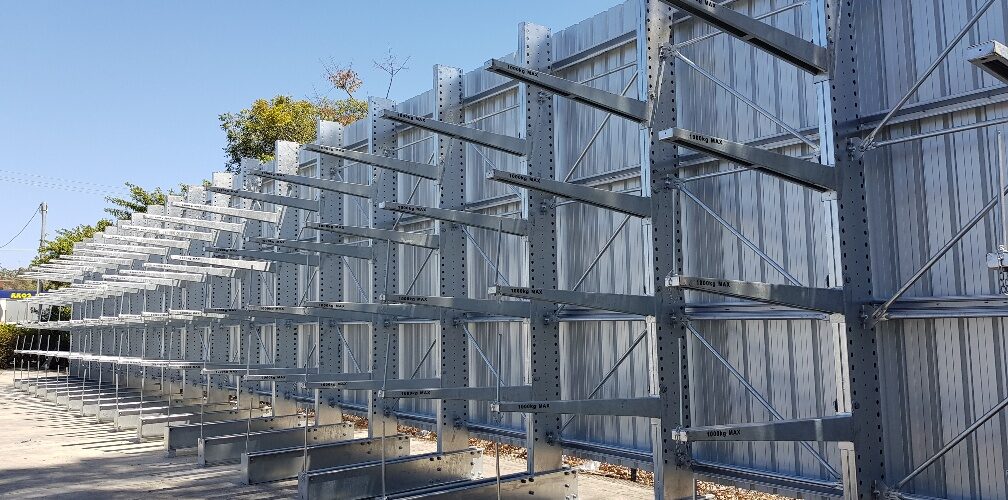
Cantilever racking uses arms projecting from columns, leaving the front open for loading long goods. It is commonly used for timber, pipes, steel sections and other products that are awkward to store between conventional front uprights.
Tell your supplier the shortest and longest products you intend to store, their weights, and whether you handle individual lengths or bundled packs. These details help determine suitable arm lengths, support spacing and loading arrangements. Ask how loose or round products will be restrained.
If the rack will be outdoors, specify that from the outset so the proposed system and finish can be assessed for the location and exposure.
Compare the complete installed cost
Compare quotes against the same scope. Check whether each includes delivery, installation, unloading equipment, decking, anchoring, load signs, protection and any required design documentation. Ask which items are included, optional or excluded.
Also explain how your stock range may change. Buying around today’s smallest or lightest products can limit your options later. Some businesses benefit from a combination of pallet racking, shelving and cantilever storage rather than one system throughout.
What to send with your enquiry
- Photos and dimensions of the storage area, including doors and obstructions.
- Product or pallet dimensions, maximum weights and quantities.
- How goods will be loaded, picked and replenished.
- Forklift or other handling equipment details, where applicable.
- Indoor or outdoor location, site address and preferred installation timing.
- Details of any existing racking you would like to retain or extend.
Check capacity before loading or changing a rack
Capacity must be confirmed for the actual rack configuration. Follow the supplier’s loading instructions and displayed limits. Do not assume that adding levels, moving beams or mixing components leaves the original capacity unchanged. Have proposed alterations assessed before proceeding.
For further safety guidance, see the SafeWork NSW pallet racking fact sheet. It explains why product dimensions, loads, handling equipment and the layout need to be considered together. This buying guide does not establish a load rating or approve a site-specific design.
Need help choosing your storage system?
Cannan Industries supplies and installs warehouse storage solutions across the Gold Coast, Brisbane and Tweed regions. Send us your measurements, photos and stock details, or call 1300 289 013 to discuss a suitable starting point for your space.